


|


 |
Thursday, March 06, 2008 State Fleets Have Gas Natural Gas, that is. The state's push toward using alternative fuel is moving forward, with the Senate's majority vote for all state vehicles to be converted. Andrew Rice (D-OKC): Natural Gas, that is. The state's push toward using alternative fuel is moving forward, with the Senate's majority vote for all state vehicles to be converted. Andrew Rice (D-OKC):
Individual consumers across Oklahoma and the nation are being forced by economic pressures to reduce their energy costs. Many are also finding ways to cut down on harmful emissions that scientists have concluded are accelerating global warming. These bills offer modest ways that Oklahoma’s public institutions can do the same thing. Natural gas is one of Oklahoma’s most plentiful natural resources. Rice said. If we can convert our state agency fleets to this clean-burning fuel while reducing hydrocarbon emissions at the same time, it’s a win-win for Oklahomans.Rice’s fleet conversion bill, S.B. 1771, is co-authored in the House by State Rep. Weldon Watson, R-Tulsa. It requires the 35 state agencies with at least ten vehicles in their fleet to either purchase vehicles that utilize CNG or convert existing vehicles to CNG in order to increase fuel efficiency by 50 percent by June 30, 2012. The Oklahoma City Democrat said he is amending his original bill to include other alternative fuels when compressed natural gas is unavailable. Other vehicle fleets which have converted to CNG have reported fuel cost savings ranging from 25% to 50%, Rice said. He also cited findings that show CNG reduces hydrocarbon emissions by 50 percent and carbon monoxide emissions by 90 percent. Rice’s bill requires that all state-owned fueling stations provide CNG by no later than July 1, 2009, provided the cost of the fuel is not 10 percent higher than conventional fuel. Labels: Andrew Rice, biofuels, Ethanol Policy Posted at 3/06/2008 08:11:00 AM | 
Gov. Henry Wants to Switch to Switchgrass
KOCO5 in Oklahoma City is reporting:
Tuesday, December 04, 2007
Gov. Brad Henry is telling a national audience that Oklahoma's future is in biofuels...the grass takes less work to grow than corn does. Corn has to be farmed every year. 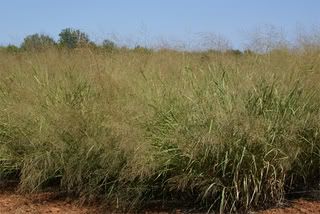 Another benefit of swithgrass over corn is that it is not consumed by humans, and may not have a similar detrimental impact on third-world nations. Former U.S. Representative (R-OK) Ernest Istook wrote in WorldNetDaily this weekend: Another benefit of swithgrass over corn is that it is not consumed by humans, and may not have a similar detrimental impact on third-world nations. Former U.S. Representative (R-OK) Ernest Istook wrote in WorldNetDaily this weekend:
Drought. War. Poverty. These are leading causes of hunger, according to the United Nations. Soon we may add another. Ethanol. Across the globe, people are discovering it’s a new contributor to world hunger. Led by the United States, governments are paying companies billions to make ethanol from corn and other crops. The result: these crops are diverted from the food supply, creating artificial shortages and higher prices. Even record harvests haven’t suppressed food prices. Instead, prices are soaring to all-time highs...(more)Not all scientists are convinced that the use of biofuels is good for the environment. In Minneapolis, the StarTribune is reporting: A pair of agriculture groups has temporarily suspended about $1.5 million in grants to the University of Minnesota to protest a controversial study by U scientists earlier this month about biofuels and global warming. [...] The study, by University of Minnesota ecologist David Tilman and others, said that dedicating huge amounts of land to grow corn, soybeans, sugarcane and other food crops for fuel could drastically change the landscape and worsen global warming. Farmers in the U.S., Brazil, Indonesia and other countries will need to clear forests, grasslands and peat lands on a massive scale to grow more of those crops, according to the research, unleashing far more carbon dioxide from natural vegetation than is saved by the lower emissions of the biofuels. Ethanol industry officials criticized the study as a simplistic analysis that doesn't include the economic benefits for those who grow biofuel crops or the environmental cost of continuing to rely on petroleum.A couple of years ago, scientists at the University of Berekely also were reported by Science Daily to have found that in terms of energy output compared with energy input for ethanol production:
Congress is considering a bill that would provide incentives for growing switchgrass. Labels: biofuels, Brad Henry, Ethanol Policy Posted at 2/26/2008 07:41:00 AM |
Ethanol Policy - What A Turkey by Ernest Istook
Ethanol subsidies are raising our food prices - dubbed the "Thanksgiving Tax" because it upped the cost we paid for Thanksgiving dinner.
Turkey farmers need almost three pounds of corn for every pound of meat put on the birds. But they must outbid those who buy up the corn to make ethanol, thanks to a 51-cents-per-gallon ethanol tax credit and other federal incentives.
America paid $69 million extra for our Thanksgiving turkeys due to ethanol mandates. That's what Joel Brandenberger of the National Turkey Federation told a Heritage Foundation audience. But it's just a small part of what he labeled the Thanksgiving Tax.
Read More by Ernest Istook
Ethanol subsidies are raising our food prices - dubbed the "Thanksgiving Tax" because it upped the cost we paid for Thanksgiving dinner.
Turkey farmers need almost three pounds of corn for every pound of meat put on the birds. But they must outbid those who buy up the corn to make ethanol, thanks to a 51-cents-per-gallon ethanol tax credit and other federal incentives.
America paid $69 million extra for our Thanksgiving turkeys due to ethanol mandates. That's what Joel Brandenberger of the National Turkey Federation told a Heritage Foundation audience. But it's just a small part of what he labeled the Thanksgiving Tax.
Read MoreLabels: Ernest Istook, Ethanol Policy, Thanksgiving Tax Posted at 12/04/2007 09:16:00 AM |
|
|
|

 |


